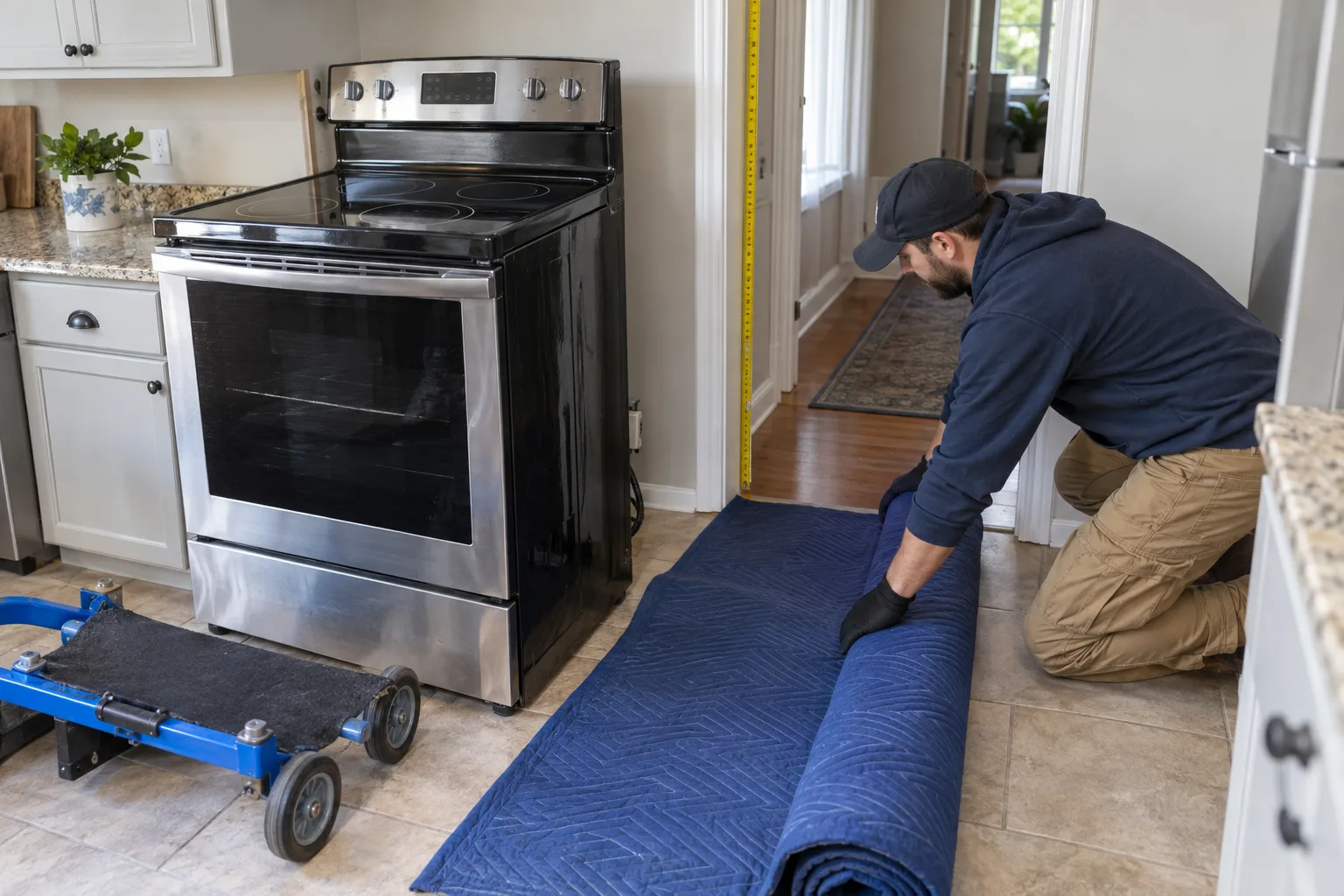
Prepare the appliance before anyone tries to move it: empty it, complete the correct utility disconnections, measure the route, and share the difficult access points with the removal provider.
Identify the appliance type
A freestanding electric range, a gas range, and a built-in wall oven require different preparation. Share the model type before anyone schedules the hauling portion.
Confirm disconnection
The appliance must be fully disconnected before removal. Gas, hardwired electrical, and built-in cabinetry work may require a qualified trade professional. Do not treat those steps as part of an ordinary haul-away request unless the operator confirms them.
Protect the route
Look for floor transitions, narrow kitchen islands, and a sharp turn near the doorway. A floor runner and proper appliance dolly can help, but the route still needs enough physical clearance.
Separate attachments
Remove loose racks and trays if they can shift. Identify anti-tip hardware, trim, or attached panels that remain with the property.
Pickup-day check
Erie County’s recycling directory advises residents to confirm refrigerant requirements with the receiving facility or municipality. Do not cut lines or release refrigerant.